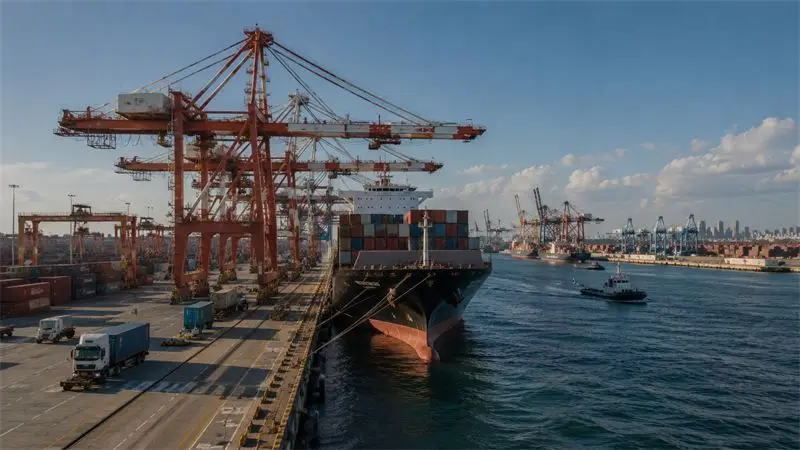


Port Halvern has won planning approval for a $2.4bn expansion that will double its container capacity by 2030, cementing the port’s position as the busiest freight gateway between the Meridian Accord states.
The consent, granted by the national infrastructure commission after a two-year examination, covers a second deep-water berth, forty hectares of reclaimed container yard, and a rail spur connecting the terminal directly to the Accord’s planned cross-border freight corridor.
Port authority chief executive Goran Malis called the decision “the green light for a generation of trade”, projecting 6,000 construction jobs at peak and 1,800 permanent roles once the berth opens. Handling capacity rises from 3.1 million to 6.4 million containers a year.
The approval carries 74 conditions, including a $110m estuary habitat fund and hard limits on night dredging. The Halvern Estuary Alliance, which fought the scheme through both examination phases, said it would appeal within the 42-day window: “A habitat fund does not relocate a tide,” said its spokeswoman, Edda Marsh.
The expansion dovetails with this week’s Coastal Shield act, whose largest single structure — the $1.2bn Halvern estuary surge barrier — will be engineered jointly with the port works to share caissons and dredging fleets. Officials say the pairing shaves an estimated $300m from combined costs.
Construction begins next spring, subject to appeal. The first new quay cranes are contracted for 2029 delivery — from the same yards, Malis noted, “whose ships will be first alongside”.